

My elderly parent was admitted to Nepean Hospital after presenting to the Emergency Department last month with a GP referral for suspected gallstones and severe right upper quadrant abdominal pain.
Before sharing what could have been better, I want to acknowledge the many doctors, nurses, allied health staff, ward staff, cleaners and support staff we encountered throughout Mum's admission. Every person we met treated my parent with kindness, compassion and respect. Many staff apologised for the delays and it was obvious they were doing everything they could within an overwhelmed system.
This story is not about blaming individual staff. It is about the system they are expected to work within.
After arriving at the Emergency Department, my parent had blood tests and a cannula inserted before being returned to the waiting room despite being in significant pain. They waited approximately two and a half hours before receiving pain relief and moved to a treatment bed an hour after that. I also needed to advocate for medication to help with their nausea after they were given Endone.
Following CT imaging, I was advised my parent was waiting for review by the surgical team before antibiotics could be commenced and a decision made regarding admission. As the hours passed, my parent's pain continued to worsen.
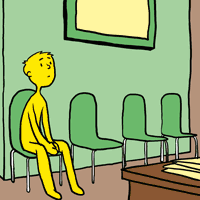
At approximately 10 pm, my parent was asked to leave their treatment bed because it was needed for another patient. Although they remained in severe pain and was still waiting to be reviewed by the surgical registrar, my parent was moved back into the Subacute waiting area where they spent around 90 minutes doubled over on hard waiting room chairs before eventually being given a recliner. Watching my parent sit there in pain while we continued waiting was incredibly distressing.
Just after midnight the surgical registrar reviewed parent and diagnosed acute cholecystitis requiring admission, IV antibiotics and surgery. When I asked why antibiotics had not already been commenced, I was advised they should have been started earlier, however the registrar was unable to comment on the Emergency Department's management.
My parent finally received Morphine and IV antibiotics after midnight and was admitted to the Short Stay Unit at approximately 1.30 am.
The following morning, the surgical team arranged an ultrasound and advised my parent may require emergency surgery depending on the findings. Unfortunately, neither my parent nor I were informed of the ultrasound results.
Communication throughout the admission was one of my greatest concerns. Different members of the Emergency Department, surgical team, medical team and nursing staff often provided conflicting information, leaving our family uncertain about what was happening. My siblings and I found ourselves organising a roster so that someone was always with my parent to advocate for pain relief, medications, investigations and updates. I believe that families should be there to provide emotional support, not to coordinate communication between clinical teams.
My parent was required to fast for surgery on multiple occasions. On one day they remained fasting from the morning after being told surgery would proceed, only to be informed late that afternoon it had been postponed because emergency cases had taken priority. I completely understand that emergency surgery must always come first. My concern was not the postponement itself, but the lack of communication until late in the day after my parent had already spent hours fasting, becoming increasingly anxious and exhausted.
During our time in the Emergency Department, staff advised there were approximately 10 ambulances waiting to offload, around 50 patients in the waiting room and approximately 148 patients in the department. Those numbers helped explain the immense pressure staff were working under, but they also highlighted the scale of the challenges facing the hospital.
Following surgery, days later, my parent remained on the ward for recovery before being discharged home. The ward nurses continued to show kindness and professionalism despite being extremely busy, and I remain grateful for the care they provided. They also appreciated the support I gave to my parent, which also helped them out.
Looking back, I believe the greatest barriers to my parent's care were not clinical. They were systemic. The clinicians knew what was wrong, they knew my parent required antibiotics, admission and surgery. I believe what delayed their care was a system under enormous pressure with Emergency Department overcrowding, access block, theatre demand, bed shortages and fragmented communication between teams.
My hope in sharing this story is not to criticise individuals, but to contribute to meaningful improvements for future patients. Better communication, earlier pain management, improved patient flow, reduced access block and greater support for frontline staff would improve not only the patient experience but also the working environment for the dedicated healthcare professionals who continue to provide compassionate care every day.
Despite everything, I want to sincerely thank the staff who cared for my parent. Their compassion never wavered. I think they deserved a health system that was able to support them as well as they supported my parent.
Reception
Waiting time
Lighting
Noise

Staff attitude
Staff skills
Treatment
Being listened to
Being given time

Explanations

Doctor
Nurses
Responses
See more responses from Care Opinion Australia