

Whether it's a Change Planned or a Change Made, we know sometimes changes can be a little trickier to spot. So what actually counts as a change?
In this latest Rapid Response Training session, we explored exactly that question.
But firstly, why bother marking a change in the first place? Why is it so important?
Marking your response with a change flag when relevant is important because it closes the loop for the author. When someone shares their experience, they're often hoping it will make a difference for the next person. By marking a story as having led to a change, you're showing them that their story didn't just receive a response, it actually led to something within your service.
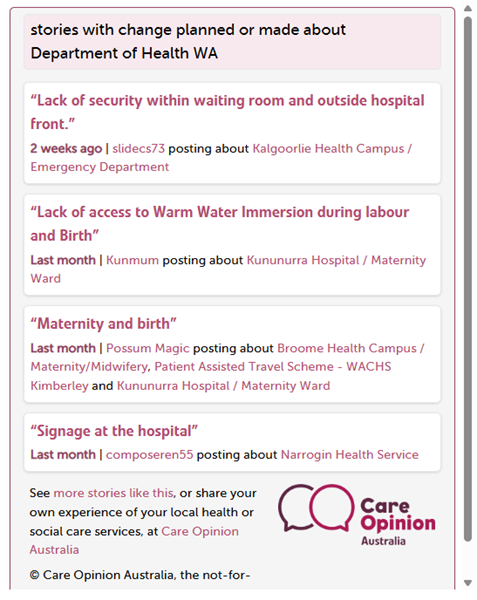
It's also valuable for your organisation. Marking changes allows you to track and report improvements over time, whether that's at ward, department, regional or organisational level. You can even display the Change Widget (see above image) on your website or intranet, showcasing recent stories that have been marked as leading to change.
But what actually counts as a change?
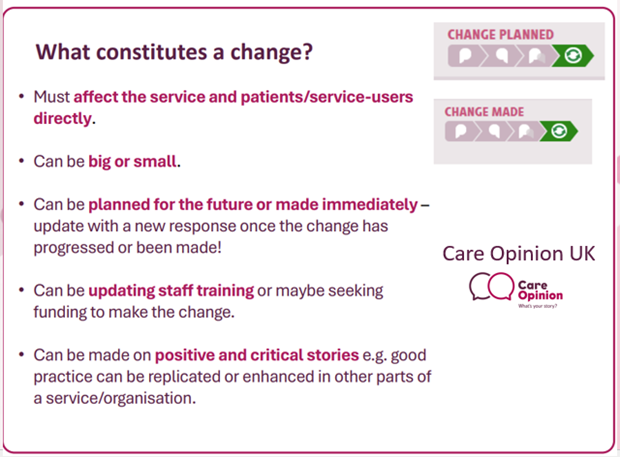
Care Opinion UK keeps the definition deliberately broad. A change can be big or small. It might be planned for the future or implemented immediately. It could involve new equipment, changes to a process, staff education or reminders and, importantly, changes can arise from both positive and critical stories.
I actually think it's helpful that the definition is broad because no one outside your organisation can really determine whether a story has resulted in meaningful change. You're the experts. You understand your service and your improvement priorities, so you're in the best position to decide whether a story has genuinely influenced practice.
Rather than trying to give a rigid checklist of what does and doesn't count, I thought it would be more useful to share some examples of the different types of changes we've seen on Care Opinion by criticality:
Criticality 0: Changes don't always need to only rise from critical stories either. This lovely story about the EMPAS clinic shows how positive stories can also be marked as Change Made, recognising a service improvement that was already making a difference for patients.
Criticality 1: This Crit 1 story resulted in improved communication between the hospital and local event organisers after a major BMX event, demonstrating how stories can strengthen future planning and processes. So too did this story change the signage at hospital, and this story discussed including birth swings.
Criticality 2:Many Crit 2 stories focus on communication and interpersonal care. In this example, the service reminded staff about the importance of obtaining consent before examining a child.
Criticality 3: As stories become more serious, the changes often become more comprehensive. In this Crit 3 story, the service developed several improvements designed to reduce the likelihood of the same experience occurring again.
Criticality 5: Even high criticality stories can result in a change, such as this story. Following a detailed review and discussions with the author, the changes focused on improving communication with patients and ensuring serious complications and alternative diagnoses are discussed more effectively in the future.
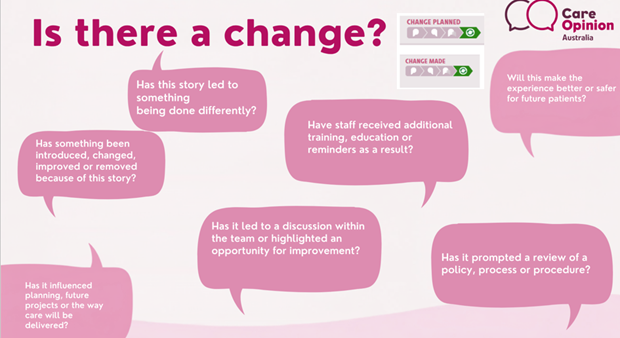
So rather than asking yourself: does this count as a change?
Perhaps ask yourself: what change is this story asking for?
Sometimes it is okay to think of a change that is within the realm of the story. What does change look like for this patient, this story?
If unsure, you can also ask yourself:
- Has something been done differently?
- Has this story influenced our service?
- Will future patients benefit because of it?
If the answer is yes, it's probably a change worth recognising. Remember, no change is too small. If a story has helped make care better for future patients, it's worth noting.
Please provide feedback for the webinar here: Rapid Response Training – Fill out form
Watch the full webinar below:
What Counts as a Change?
What Counts as a Change? https://www.careopinion.org.au/resources/blog-resources/1-images/1c1f020003a24c0eb4e5f50f1ff23363.png Care Opinion Australia +617 3354 4525 https://www.careopinion.org.au /content/au/logos/co-header-logo-2020-default.pngUpdate from Care Opinion Australia
Posted by Ellen McGovern-Greco, Moderation and Reporting Officer, Care Opinion Australia, on
Thanks for your feedback.