

Yesterday, on 16 June, we ran our first Care Opinion Rapid Response Training session, using the theme: Balancing Empathy with Policy and Processes.
We looked at something many of us struggle with when responding to feedback, complaints, concerns and compliments: how do we balance empathy when we also may need to talk into bureaucratic policy and processes?
When responding, sometimes we lean heavily into empathy but don't explain what happened. Other times, we explain policy really well, but this may leave the response feeling cold or defensive.
So how do we balance both?
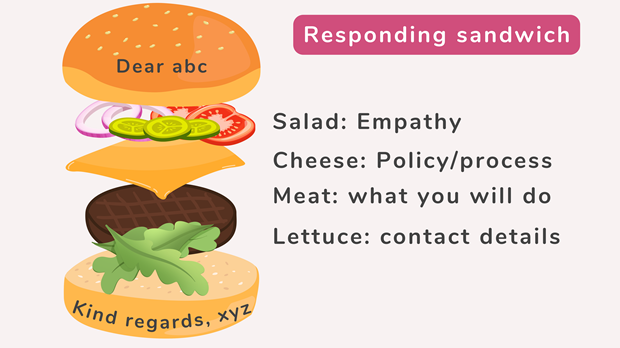
Well, it can be quite simple really. We can think of it as a response sandwich.
The bread is our introduction and our farewell. It's what holds everything together and sets the overall tone of the response. We can be more casual if it is a positive story, as seen in some of the stories we discussed:
- https://www.careopinion.org.au/103230
- https://www.careopinion.org.au/105641
- https://www.careopinion.org.au/105108
The salad is empathy. This runs throughout the response and is about showing that you've listened and that you can imagine being in that person's shoes. If somebody was left waiting, perhaps they felt forgotten. If communication was poor, perhaps they felt confused or anxious. You don't need to guess every emotion perfectly, but showing that you've considered the human impact can make a huge difference in how the response is received. It is important to also note that we can apologise without necessary assuming ‘blame’, we can say sorry simply for what they experienced and how they felt:
The cheese is the policy and processes. This is where we explain what should have happened, how a particular process works, or why a decision was made. There can be a temptation to avoid explaining policy because we're worried it will sound defensive or bureaucratic.
In reality, explaining policy can be a very empathetic thing to do. When we explain policy clearly, we're treating patients as equals. We're giving them access to the same information that informed the decision. Rather than saying, "this is the rule", we're helping them understand how the process works and how it applied in their situation.
Policy explanation treats the patient as a participant in the decision-making process rather than as someone who is simply being managed. The goal is to be both accurate about the policy and responsive to the human impact of that policy:
- https://www.careopinion.org.au/104764
- https://www.careopinion.org.au/98453
- https://www.careopinion.org.au/97347
- https://www.careopinion.org.au/96103
The meat is the action. Empathy addresses a patient's emotional needs, and explaining policy treats the patient as an equal by giving them access to the reasoning behind a decision. But explaining what you will do goes a step further: it demonstrates that the person is not being left alone with the policy. The response becomes collaborative rather than merely informational. We're effectively saying: "I've listened, I've explained, and here's how I'm going to act on what you've told me."
- https://www.careopinion.org.au/103573
- https://www.careopinion.org.au/102637
- https://www.careopinion.org.au/94432
- https://www.careopinion.org.au/100219
- https://www.careopinion.org.au/98746
And finally, the lettuce is any contact details or opportunities for further discussion. It's the extra layer that helps people know where to go if they need additional support or information.
We finished by looking at an example story and response which shows how the response sandwich can work in practice:
The takeaway message from this is that explaining policy can be empathetic, but it falls flat without explaining what you're going to do. It is all about balance, just like a sandwich.
If you explain processes in depth and the "why" behind the rule, you're treating the patient (and the public who read these stories) as equal counterparts in healthcare. It is a very democratising process, where we shed some of the more paternalistic traditions of healthcare and instead embrace consumers as active participants in their own care and in the healthcare system more broadly. Empathy, policy explanation and describing further actions all work together to achieve this. It is a fundamentally patient-partnering and centring endeavour.
Please provide feedback for the webinar here: Rapid Response Training: Balancing Empathy with Policy and Processes – Fill out form
Watch the full webinar below:
Balancing Empathy with Policy and Processes
Balancing Empathy with Policy and Processes https://www.careopinion.org.au/resources/blog-resources/1-images/65f2ac61e8a34b24a48e20fee8bd800d.png Care Opinion Australia +617 3354 4525 https://www.careopinion.org.au /content/au/logos/co-header-logo-2020-default.pngUpdate from Care Opinion Australia
Posted by Ellen McGovern-Greco, Moderation and Reporting Officer, Care Opinion Australia, on
Thanks for your feedback.